
Tongue Ties and Lip Ties – When Should You Worry and Who Should You Consult?
Tongue-tie (ankyloglossia) is a condition present at birth that restricts the tongue's range of motion.
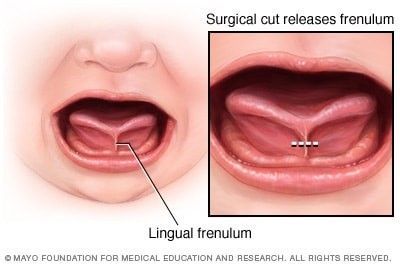
With tongue-tie, an unusually short, thick or tight band of tissue (lingual frenulum) tethers the bottom of the tongue's tip to the floor of the mouth, so it may interfere with breast-feeding. Someone who has tongue-tie might have difficulty sticking out his or her tongue. Tongue-tie can also affect the way a child eats, speaks and swallows
Sometimes tongue-tie may not cause problems. Some cases may require a simple surgical procedure for correction. The gold standard procedure (frenotomy or frenulectomy) uses a spatula device to lift the tongue and simple scissors to cut the thin webbing underneath. This can be done by pediatricians in the birth hospital or office, and causes minimal pain or bleeding. Some dentists offer laser surgery at very high prices to remove the webbing. We have seen babies in severe pain after this procedure sometimes resulting in oral aversion (refusing to eat).
Signs and symptoms of tongue-tie include:
- Difficulty lifting the tongue to the upper teeth or moving the tongue from side to side
- Trouble sticking out the tongue past the lower front teeth
- A tongue that appears notched or heart shaped when stuck out
- Breast-feeding problems. Breast-feeding requires a baby to keep his or her tongue over the lower gum while sucking. If unable to move the tongue or keep it in the right position, the baby might chew instead of suck on the nipple. This can cause significant nipple pain and interfere with a baby's ability to get breast milk. Ultimately, poor breast-feeding can lead to inadequate nutrition and failure to thrive. Frenotomy or frenulectomy alone are not always sufficient to resolve the latch issues and mothers should continue to work with lactation consultants to maximize comfort and milk transfer.
- Speech difficulties. Tongue-tie can interfere with the ability to make certain sounds — such as "t," "d," "z," "s," "th," "r" and "l."
- Poor oral hygiene. For an older child or adult, tongue-tie can make it difficult to sweep food debris from the teeth. This can contribute to tooth decay and inflammation of the gums (gingivitis). Tongue-tie can also lead to the formation of a gap or space between the two bottom front teeth.
- Challenges with other oral activities. Tongue-tie can interfere with activities such as licking an ice cream cone, licking the lips, kissing or playing a wind instrument.
A word about lip frenulums and lip tie. Many babies are born with a prominent upper frenulum that appears to cause a gap in their teeth once the teeth come in. There is rarely a reason to cut or laser this normal and common tissue. Studies are very mixed as to the benefits of surgery on this tissue. There are studies that demonstrate cutting heals better than laser surgery. If you think your baby has a restrictive upper frenlum, please give us a call. We will exam your child and then we may refer you to a breastfeeding specialist or ear, nose, and throat doctor. But more often than not we recommend observation.